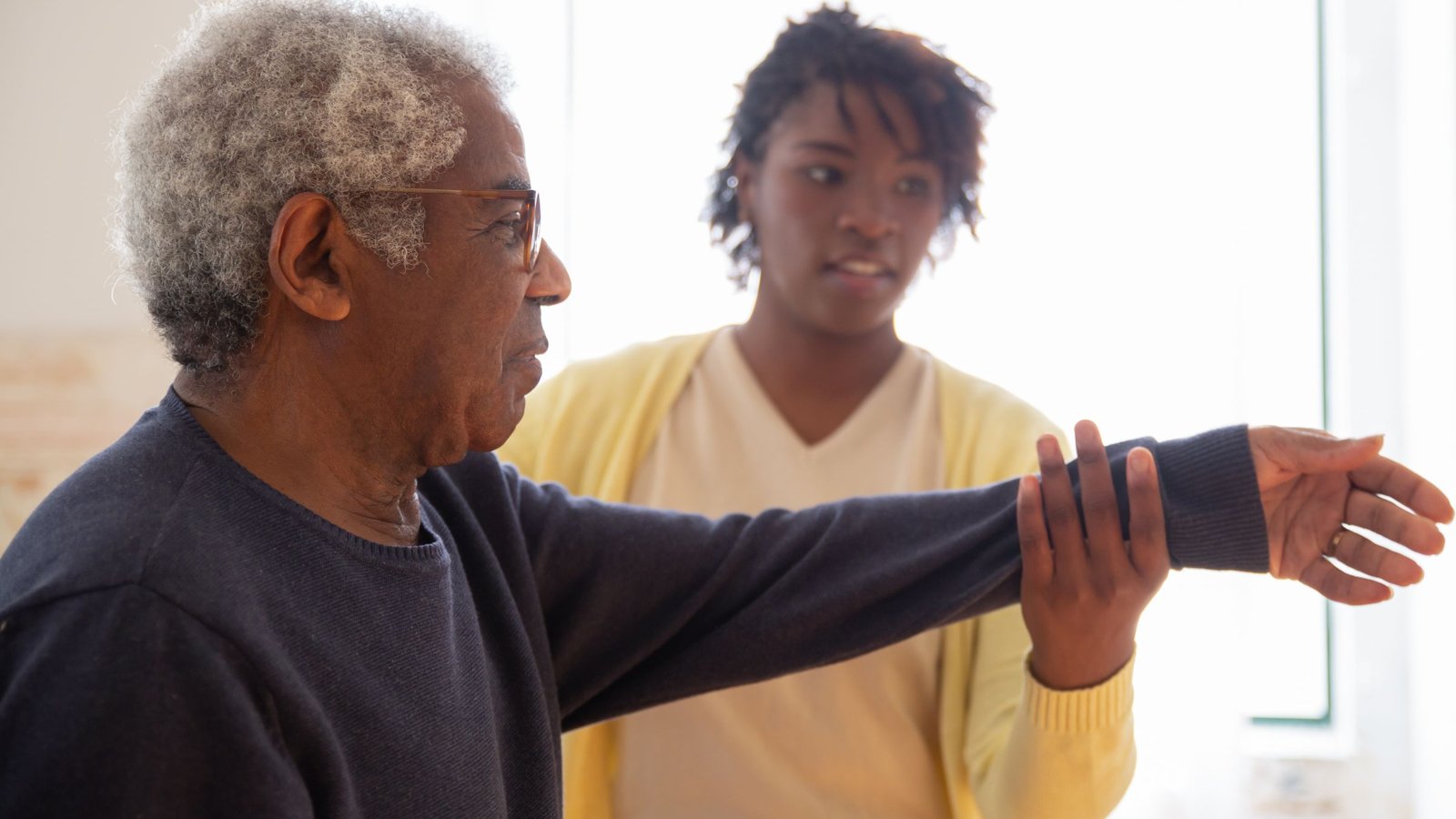
In home health, there's no gym down the hall. Whatever you need for an evaluation, a balance session or a safety check has to fit in the car and come through the front door in one trip. Your agency will set rules for supplies and infection control, so follow its bag-technique policy first.
The bag
- Gait belt. Safe transfers and gait training start here, every visit.
- Blood pressure cuff, stethoscope and pulse oximeter. Vitals before and after activity, with no wall monitor to check.
- Goniometer and tape measure. Range of motion and edema measurements to show progress in the note.
- Resistance bands in a few levels. A whole home exercise program that weighs almost nothing.
- Stopwatch or phone timer. For timed functional tests your agency uses.
- Printed home exercise sheets. Patients and caregivers follow pictures better than memory.
- Hand sanitizer, gloves and a barrier for your bag. Every kitchen table is a new surface.
- Charged tablet and car charger. Documentation happens between driveways.
- Flashlight. Dark porches, dim stairwells and fall-risk checks.
Pro tip
Do a quick home safety scan on every visit: rugs, lighting, bathroom grab points and the path from bed to bathroom. That observation is part of the care.
This is a composite example built from items commonly used in this setting, not an endorsement of any brand. Follow your employer's policies and your state practice act.